
Think loud, speak science: the second edition of FBK Science Ambassadors kicks off
February 23, 2026
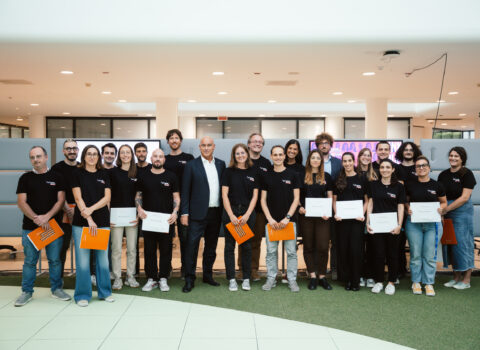
21 young researchers will take part in the advanced training course in communication and dissemination of FBK science
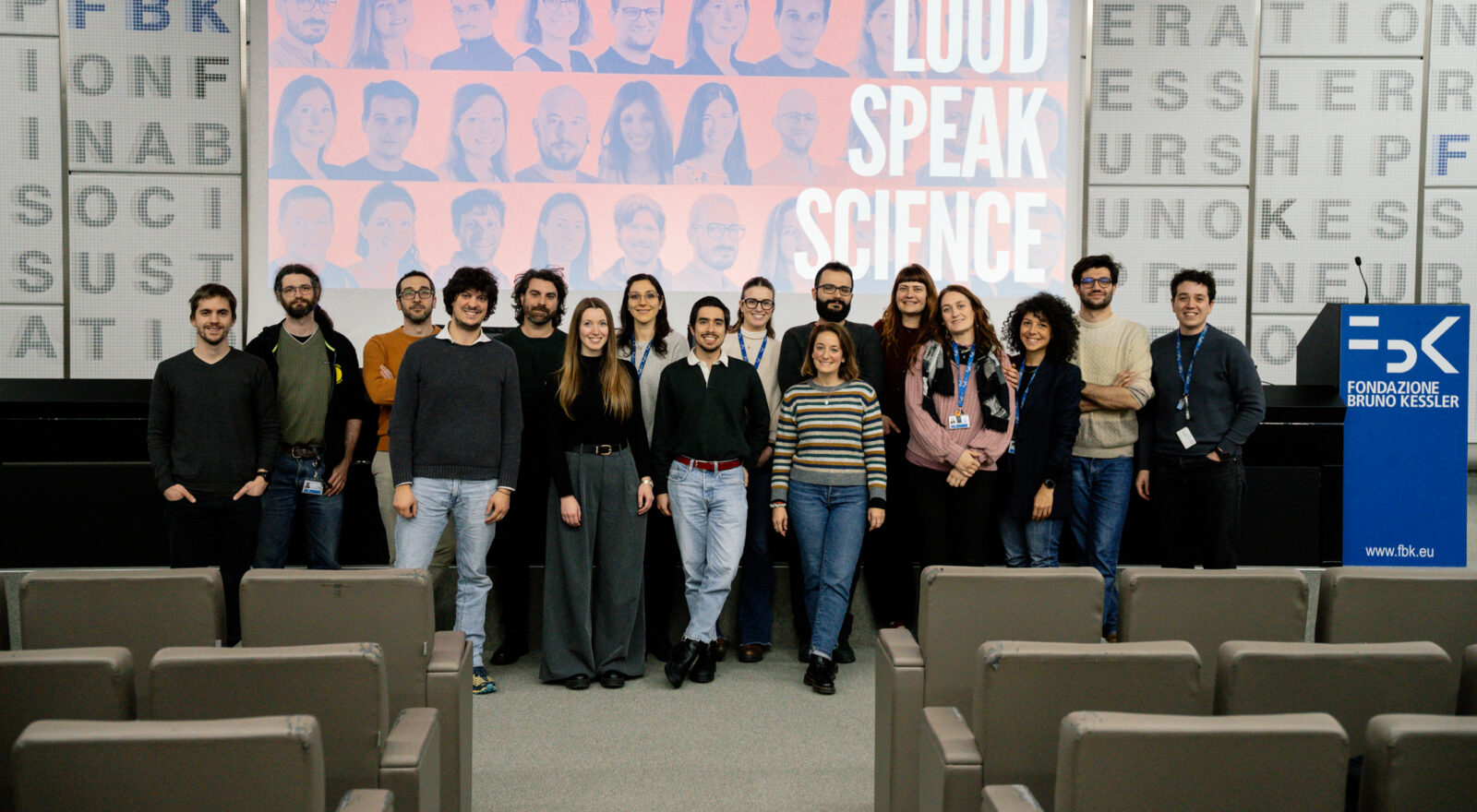
From quantum technologies to online disinformation, from encryption to digital health, to public policy, energy sustainability, contemporary history, and many other fields. These are the topics that the 21 candidates for FBK Science Ambassadors bring to the training course, with a second heterogeneous cohort of Fondazione Bruno Kessler researchers ready to get involved not only in laboratories, but also in science dissemination.
They come from the Foundation’s various science and humanities centers and reflect the many facets that shape its identity: technological and experimental, social and humanistic, innovation-driven yet attentive to critical analysis and public impact. It is precisely this plurality of perspectives that constitutes one of the distinctive elements of the FBK Science Ambassador program.
The first edition marked the start of a project that delivered concrete results, so much so that it was recently presented as a case study at the National Conference on Science Communication organized by SISSA in Trieste.
Today that path takes a new step forward: the training, launched with the kick-off event and a masterclass dedicated to storytelling, will accompany the new group toward joining the FBK Science Ambassador community, helping to expand the network, integrate complementary skills, and enhance the dissemination of the Foundation’s research.
L
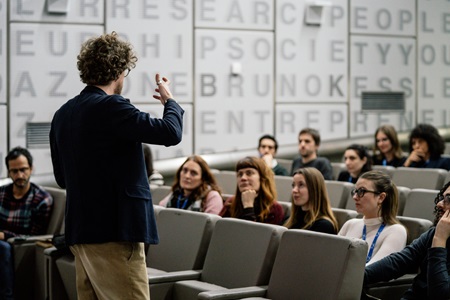
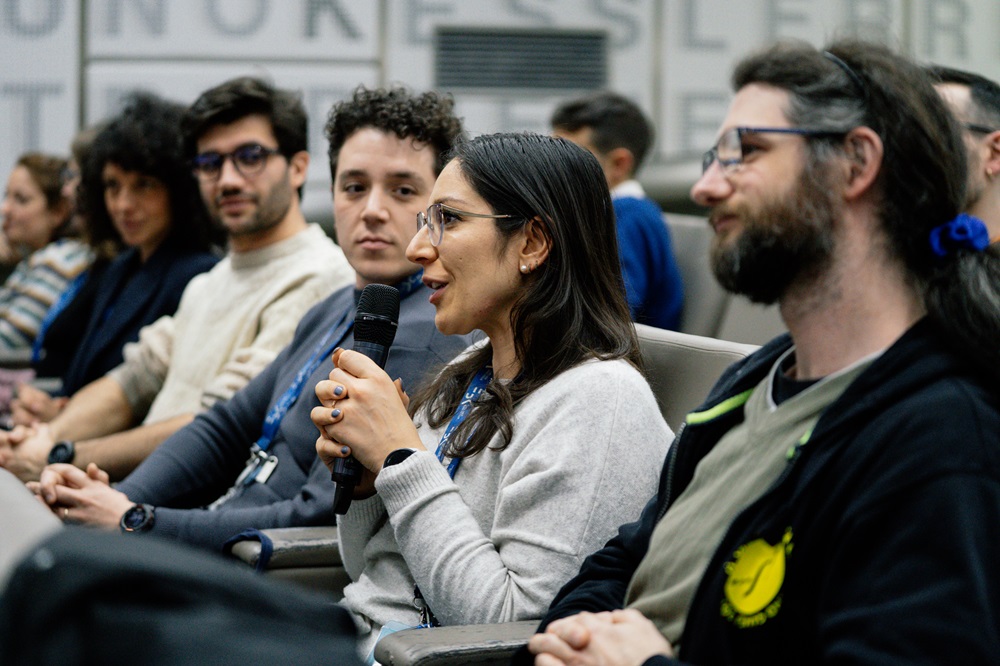
The launch event was an opportunity for sharing and discussion: a chance to officially kick off the training course and to give new participants the opportunity to hear from ambassadors from the first edition, creating a direct dialogue between those who have already completed the program and those preparing to begin it. The skills developed during the training course enable them to amplify research beyond the laboratory, making it accessible and engaging even to those without specialized expertise.
he training course is designed and delivered by Feltrinelli Education – Scuola Holden and, through theoretical foundations and practical workshops, focuses on storytelling, public speaking, media relations, content creation, and social media strategy. It is not just a matter of refining communication
techniques, but of structurally integrating the narrative and dissemination dimension into the work of those who conduct research.
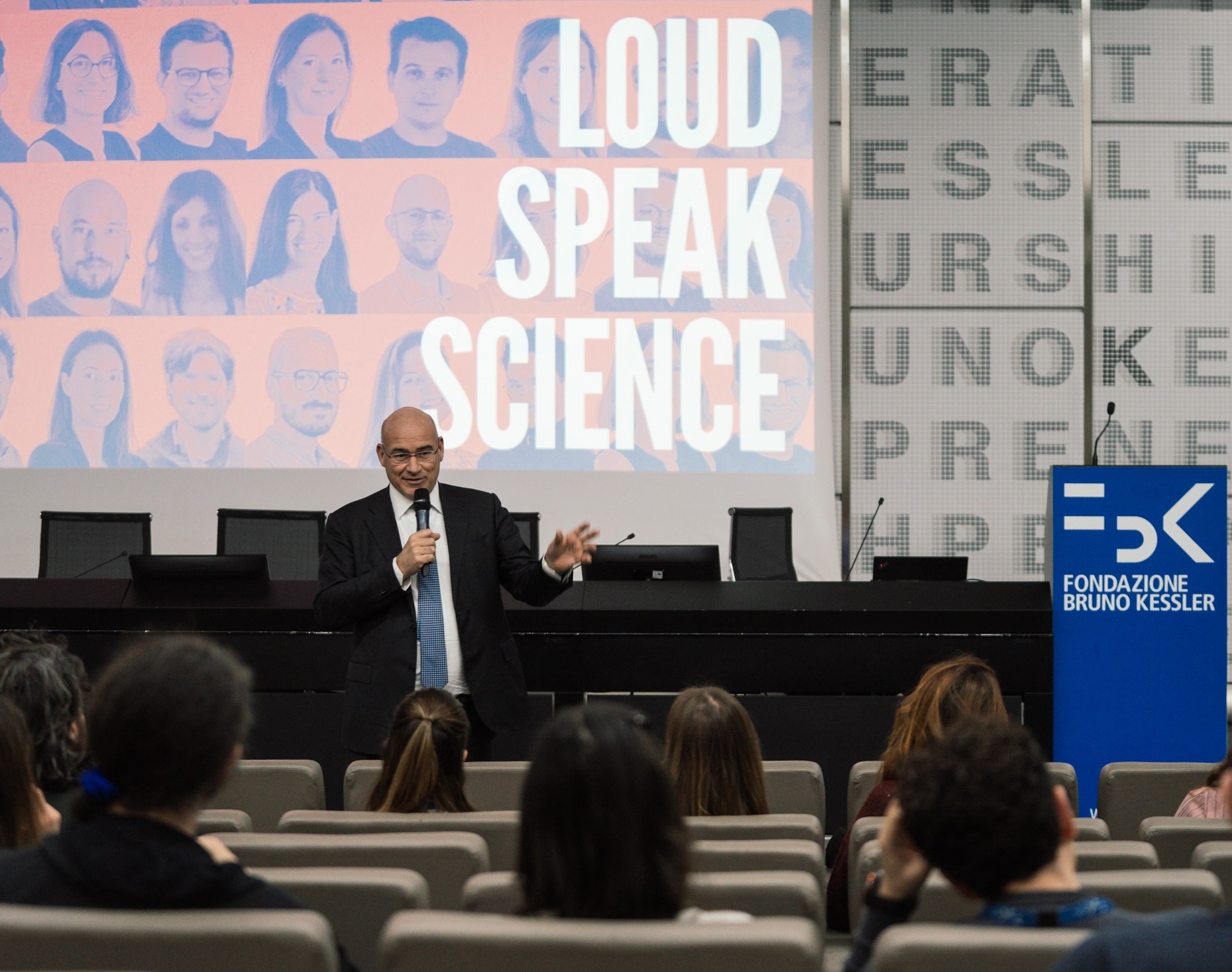
“Getting involved and stepping out of your comfort zone is the best way to grow,” Ferruccio Resta, Fondazione Bruno Kessler’s president, said. “For those who conduct research, it means taking science out of the laboratory, and knowing how to disseminate it is a skill that is cultivated with method and practice. You learn to transform complex results into clear and accessible messages for different audiences without losing rigor, while also strengthening your self-awareness step by step. After the success of the first pilot project, we decided to continue on this path and expand the FBK Science Ambassador community, in line with our desire to enhance human capital.”
With the start of the second edition, FBK thus consolidates an increasingly broad and cross-cutting community, composed of voices and faces that represent the plurality of its expertise.
The group that began the training consists of 21 researchers from various research units across the Foundation: Lorenzo Vaquero Otal with the Center for Augmented Intelligence; Stefano Berlato with the Center for Cybersecurity; Giacomo Ghedini with the Italian-German Historical Institute; Dylan Trenti with the Center for Digital Industry; Giulia Olivato with PCT-Privacy; Lucila Gisele Alvarez Zuzek and Alessia Torre with the Center for Digital Society; Luigina Montano and Annalisa Tassi with the Institute for Evaluation Research on Public Policies; Michele Bolognese and Matteo Varesco with the Center for Sustainable Energy; Anna Genovese, Nicolò Lazzaro, and Leonardo Sanna with the Center for Digital Health & Wellbeing; Martina Dell’Eva, Irene Facchin, and Lucia Pederiva with Strategic Planning; Martino Bernard, Alessandro Lega, Elena Missale, and Elia Scattolo with the Center for Sensors & Devices.
The author/s
Related articles