April 2026: FBK projects making headlines
May 4, 2026
From simulations for climate emergencies to green hydrogen, from artificial intelligence to quantum and space technologies, and from digital health to reflections on technology and society: these are the FBK research topics that made headlines in April Virtual training for future extreme weather
Virtual training for future extreme weather
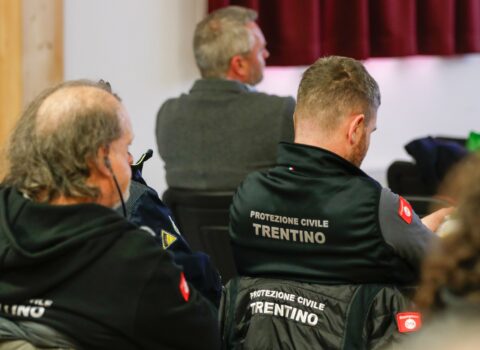
The growing impact of extreme weather events and the need to improve emergency management are the focus of an in-depth feature published by National Geographic, which highlights the development of new technologies for European civil protection (disaster response) training. The article presents the TRACENET project, a system based on 3D scenarios and virtual reality that enables operators to simulate complex interventions remotely, improving coordination and decision-making. In this context, FBK played a key role as the project’s scientific partner, contributing to the development of the technological platform and the creation of high-precision three-dimensional models used to recreate realistic scenarios, such as flooding in the Trento area. These models, developed in particular by the 3DOM – 3D Optical Metrology unit at the Center for Digital Industry, make it possible to plan interventions and test strategies in immersive, interactive environments. This approach does not replace field exercises but complements them, offering a more sustainable solution in terms of cost and resources and representing an innovative response to the growing complexity of climate-related emergencies.
National Geographic | Esercitazioni virtuali per essere pronti al meteo estremo del futuro | April 2026
Green hydrogen as a driver of the Alpine transition
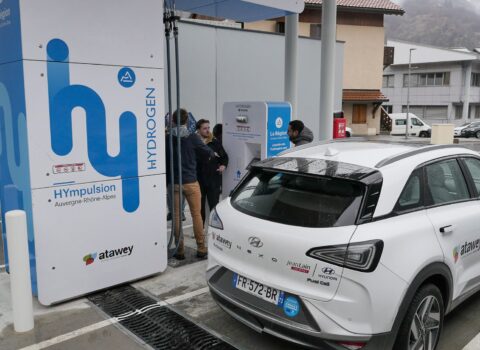
The role of green hydrogen in the energy transition of mountain regions was examined in an in-depth article by Il Sole 24 Ore, which describes the evolution of the “Trentino model.” The article highlights how the European AMETHYST project has helped define a concrete strategy for integrating hydrogen into local value chains, from production to use in hard-to-decarbonize sectors. A key element in this context is the strengthening of research through the H2@TN hub, a joint laboratory between Fondazione Bruno Kessler and the University of Trento dedicated to developing new materials for electrolyzers and advanced storage solutions. The initiative is part of a broader vision that combines strategic planning, investment, and expertise, helping transform the Alpine region into a laboratory for innovation in the European energy transition.
Il Sole 24 Ore | L’idrogeno verde come motore della transizione alpina | April 27, 2026
The efficiency paradox: AI’s impact on work
The impact of artificial intelligence on work was the focus of an in-depth article published by Italian Tech of La Repubblica, which analyzes how increased efficiency from AI adoption does not necessarily translate into more free time, but often leads to intensified work. The article includes the perspective of Michela Milano, Director of the Digital Society Center at FBK and Professor at the University of Bologna, who notes that framing the relationship with AI in competitive terms is misleading: “entering into competition is not the right approach, because we are not comparable.” Milano instead emphasizes the value of complementarity between human capabilities and intelligent systems, underscoring the importance of preserving human creativity and decision-making in an increasingly automated environment. This contribution is part of a broader debate on the transformation of work, in which research plays a crucial role in guiding sustainable, human-centered technological development.
Italian Tech la Repubblica | Il boomerang tecnologico. E se ci facesse faticare di più? | April 22, 2026
Emerging technologies and responsibility: the value of dialogue
The social and ethical implications of emerging technologies are explored in an article published in Corriere della Sera by Monica Consolandi, a researcher at FBK’s Center for Digital Health and Wellbeing. The article reflects on how technological innovation, while improving quality of life, raises significant questions related to data management, artificial intelligence, and the new frontiers of life engineering. In this rapidly evolving and often complex landscape, Consolandi emphasizes the need to approach change as a critical moment in a positive sense: an opportunity to make informed choices and define the values that will guide the future. Dialogue across disciplines thus becomes essential—an indispensable condition for integrating scientific, ethical, and social perspectives and for guiding technological development in a responsible and shared way.
Evening courier | Le nuove tecnologie richiedono dialogo tra discipline | April 26, 2026
Quantum technologies: from the lab to applications
The prospects and applications of quantum technologies were highlighted in an article by Corriere della Sera covering the congress of the National Quantum Science and Technology Institute (NQSTI), recently held in Naples. The event brought together researchers, academics, and industry representatives to discuss the practical impact of quantum technologies in areas ranging from computing to advanced sensors. A key moment was the session on quantum sensing, coordinated by Richard Hall-Wilton, Director of the Center for Sensors & Devices at FBK, who emphasized the role of these technologies in developing extremely high-precision detection systems, with applications spanning scientific research and industry. The topic reflects growing interest in solutions capable of translating advances in quantum physics into operational tools, strengthening the link between cutting-edge research and industrial innovation.
Evening courier | Le particelle del futuro “sono ricerche cruciali anche per le aziende” | April 12, 2026
Technology, health, and culture: three perspectives from FBK research
In April, L’Adige published editorials by Elio Salvadori, Giuseppe Jurman, and Matteo Fadini, offering a multifaceted view of the relationship between research, technology, and society across three key areas. Elio Salvadori, a researcher at the Center for Digital Health and Wellbeing, highlighted the potential of digital technologies for inclusion, showing how virtual reality, serious games, and support tools can improve autonomy and quality of life for people on the autism spectrum, provided they are designed in collaboration with users. Giuseppe Jurman, also a researcher at the Center for Digital Health and Wellbeing, examined the impact of artificial intelligence in healthcare, emphasizing how predictive models can support diagnosis and personalized care for Parkinson’s disease while maintaining the central role of the physician in a “clinician-in-the-loop” approach. Finally, Matteo Fadini, Head of the FBK Library, reflected on the value of books and copyright, tracing the historical evolution of copyright and highlighting the need to balance the protection of creativity with access to knowledge.
L’Adige | Autismo, nuove sfide da cogliere | April 2, 2026
L’Adige | Il Parkinson e la sfida dell’IA | April 11, 2026
L’Adige | La giornata mondiale del libro e del copyright | April 23, 2026
The author/s
Related articles