
Toward zero emissions: FBK’s sustainability efforts, from strategic planning to the next generation of researchers
September 21, 2026
September 21 marks World Zero Emissions Day, an opportunity to take stock of how institutions and regions are addressing the challenge of decarbonization. At FBK, research and internal management go hand in hand on this issue, making the Foundation's activities increasingly sustainable while developing the skills that will drive tomorrow's energy transition.
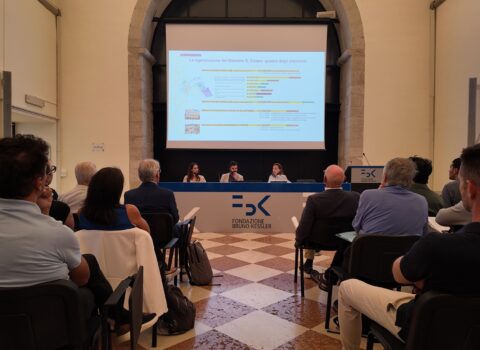
Launched in Canada in 2008 at the initiative of the Climate Leadership Coalition, World Zero Emissions Day aims to raise public awareness of reducing the use of energy from fossil fuels for 24 hours by promoting a low-impact lifestyle. FBK has long been committed to this cause and pursues it in a tangible, systematic way through a Sustainability Plan, a tool that translates the commitments of the 2024–2027 Strategic Plan into measurable objectives. The document is structured around ESG-oriented pillars—Resources and Environment, People, and Governance—with the addition of two pillars specific to the Foundation’s context: Research and Innovation, and Data Security and Digital Infrastructure. This results in a total of 22 themes, with 71 actions being developed for implementation by the end of 2027.
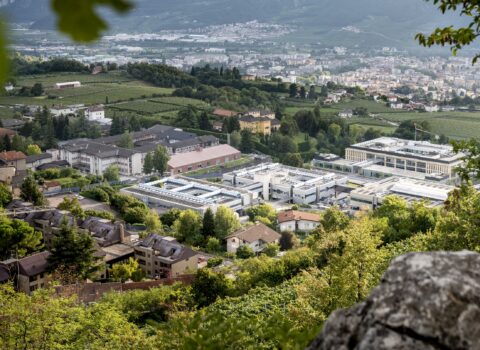
The “Resources and Environment” pillar is the one most directly connected to the zero-emissions theme. FBK has pursued an energy efficiency strategy since 2010, leading to the implementation of more than 80 efficiency measures in buildings, an Energy Management and BEMS system for real-time monitoring of consumption, and the gradual expansion of photovoltaic systems. Over the past 15–20 years, these coordinated actions have led to a 37% reduction in energy consumption, even though the number of plants has tripled over the same period.
Furthermore, self-generated energy increased from 0.7% of total needs in 2011 to 5.9% in 2024, while in terms of sustainable mobility, FBK has entered into agreements for public transportation, installed bicycle racks, and launched the Up2Go app to encourage workplace carpooling and low-impact commuting. Internally, periodic energy audits and Building Automation also continue to reduce consumption in the offices and laboratories in Povo, in collaboration with laboratories specializing in batteries and hydrogen.
This “inward-looking” commitment is complemented by “outward-looking” action through the Ceter for Digital Industry and the Center for Sustainable Energy which participate in major European and regional projects. The InCUBE project, for example, applies Digital Twins, BIM models, and off-site prefabricated solutions to the deep energy retrofit of buildings, with demonstration sites in Trento’s historic center, including Santa Chiara Open Lab and the Santa Chiara Cultural Services Center.
In parallel, project initiatives such as ECOEMPOWER support the development of renewable energy communities, promoting collective self-consumption for citizens and public facilities.
Pioneers in Research: The new generation enters the lab
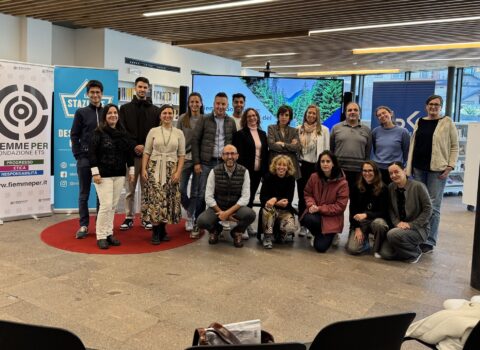
While the Sustainability Plan focuses on internal management, the second edition of the “Pioneers in Research Summer School,” which concluded on September 11, showcases the type of research FBK aims to foster for the future. From September 7 to 11, the Center for Sustainable Energy hosted a group of students for an intensive program entirely dedicated to energy technologies: advanced materials, batteries, and hydrogen.
The five-day program combined theoretical lectures, laboratory sessions, and field trips, ranging from an introduction to the Center’s laboratories to the design and characterization of nanostructured materials and a day dedicated to batteries and hydrogen as key drivers of the energy transition. The fourth day broadened the focus to sustainability, decarbonization, and the role of artificial intelligence on the path to net-zero emissions, with visits to companies in the industrial sector. The week ended with the “Pioneers’ Challenge: Road to Net Zero,” in which participants worked in teams to propose their scenarios for the energy transition.
Two paths, one goal
The Sustainability Plan and the Summer School represent two sides of the same ambition: to reduce the environmental impact of our activities while training those who will design the low-emission technologies of tomorrow. FBK’s path toward zero emissions is concretely measured through this interplay between responsible management of the present and investment in future skills.
The author/s
Related articles