

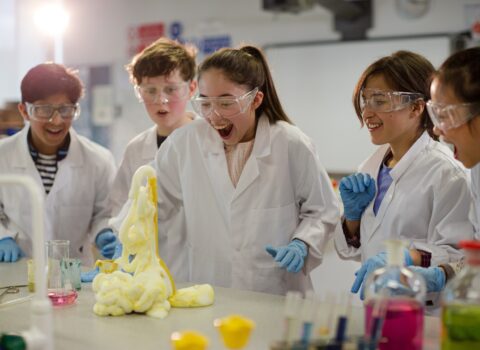
When science meets the next generation: SPARKLE Science Day at FBK
June 23, 2026
One hundred students, dozens of researchers, a full day of activities and discovery. The final event of the SPARKLE project transformed FBK into a hub of exploration and curiosity, demonstrating both the value and the possibility of bringing younger generations closer to science.
On May 27, the halls and laboratories of Fondazione Bruno Kessler were filled with excitement, curiosity, and a desire to learn. One hundred middle school students spent the day at FBK as part of Science Day, the concluding event of the SPARKLE project (STEM Practical Activities to Raise Knowledge, Learning and Exploration).
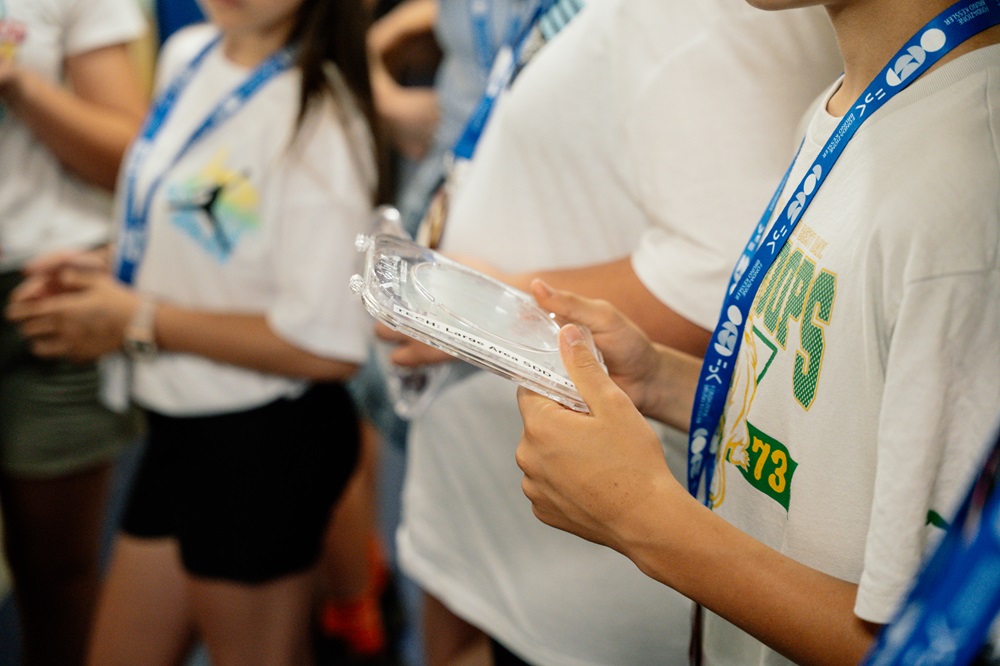
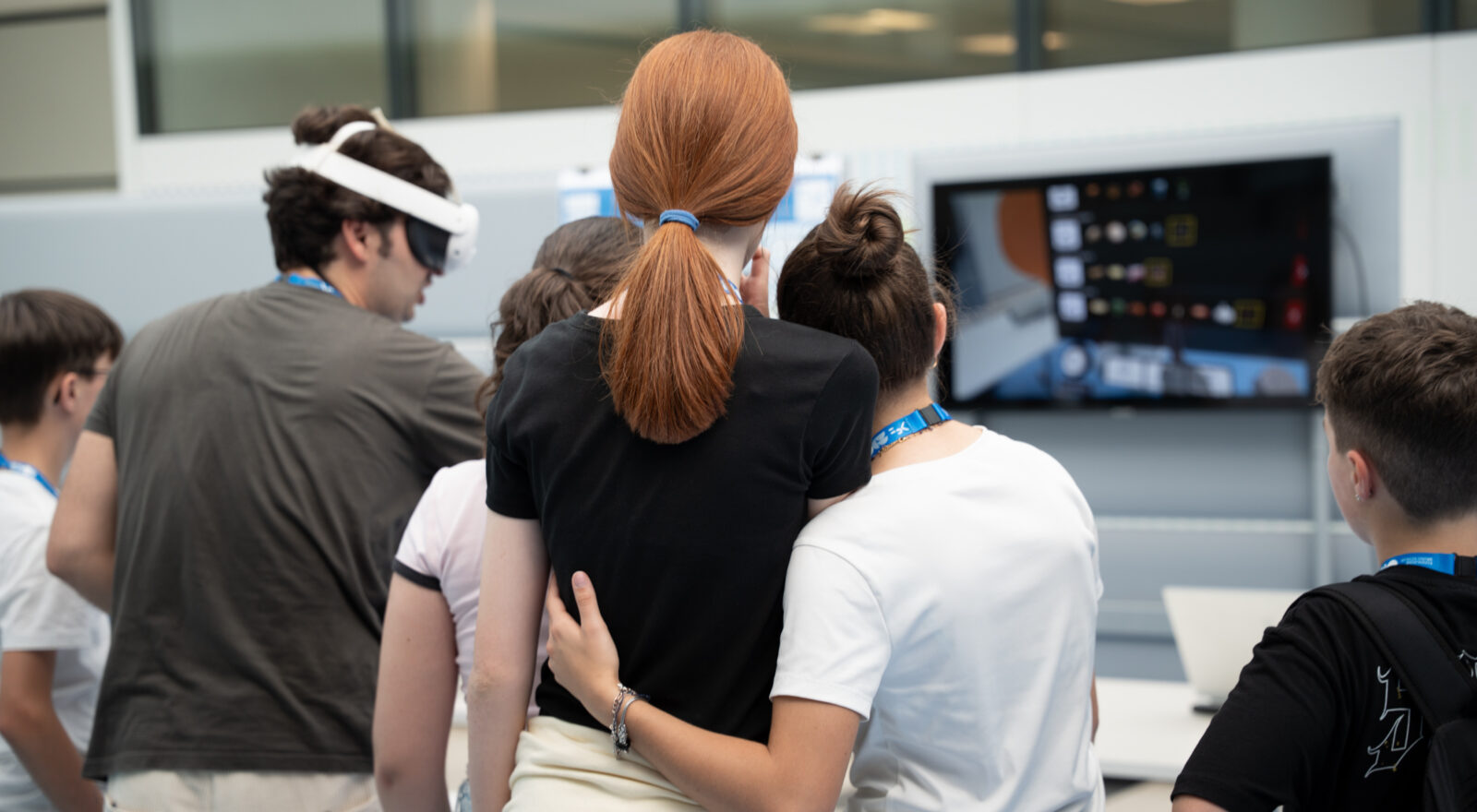
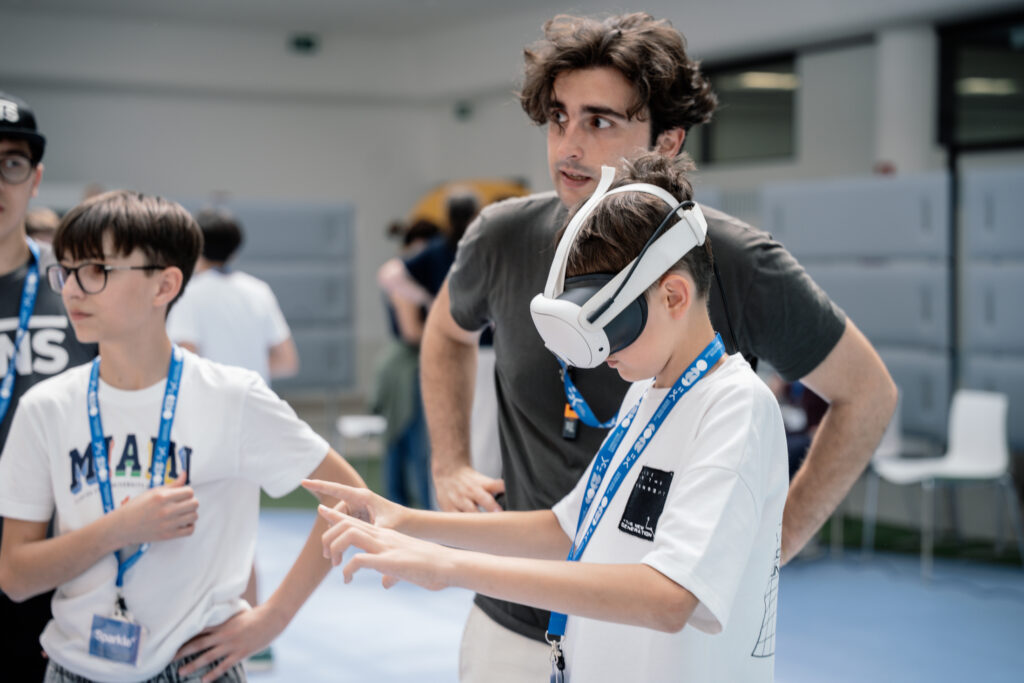
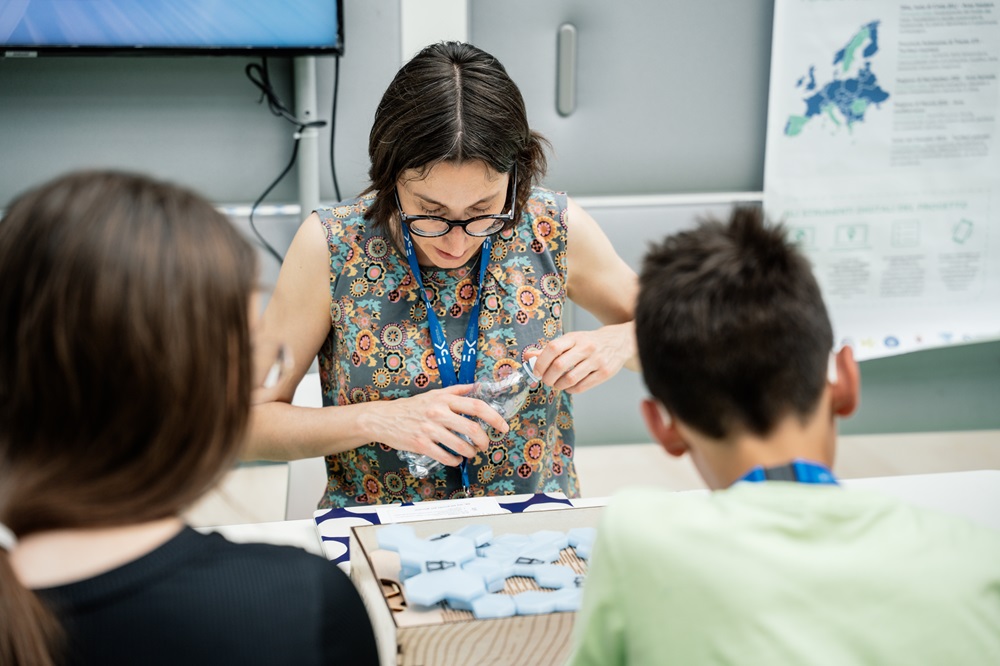
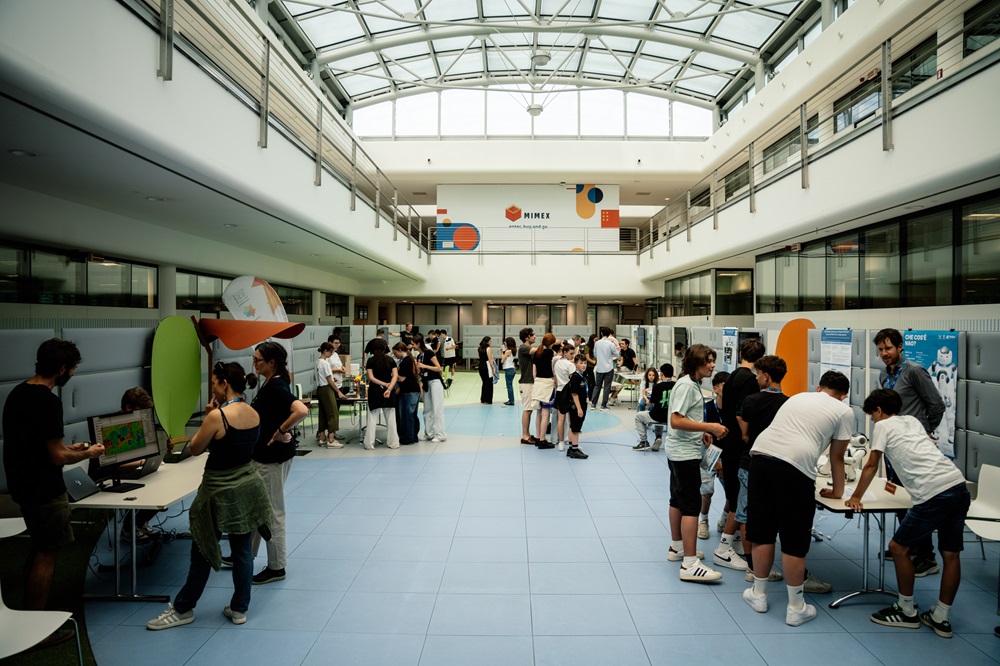
This was far more than a guided tour. The five classes in attendance—selected as winners of a final challenge among the 51 classes from Trentino and Veneto that participated in the project’s educational activities, where students were asked to apply what they had learned—rotated through a series of hands-on experiences throughout the day. These included a visit to the laboratories of the Center for Sensors & Devices, featuring clean rooms, analytical instruments, and testing and development facilities; a workshop at the University of Trento’s FabLab, where students explored digital fabrication through vector graphics design, laser cutting, and engraving; an augmented reality physics lab developed by Level Up, where teams tested their precision, skill, and intuition through activities focused on motion; and a series of booths featuring demonstrations and interactive activities led by FBK researchers.
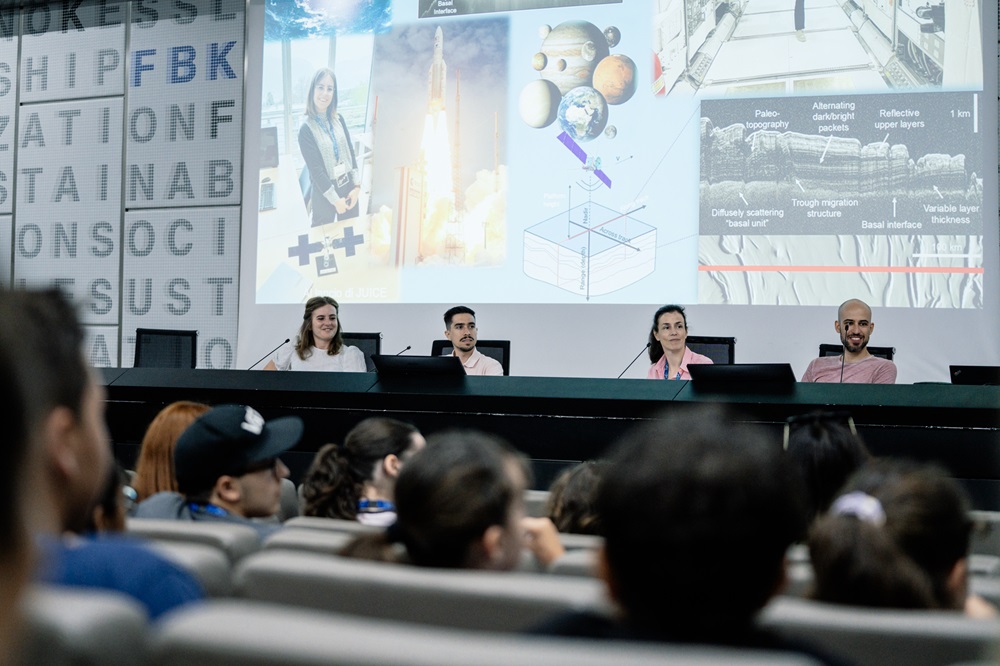
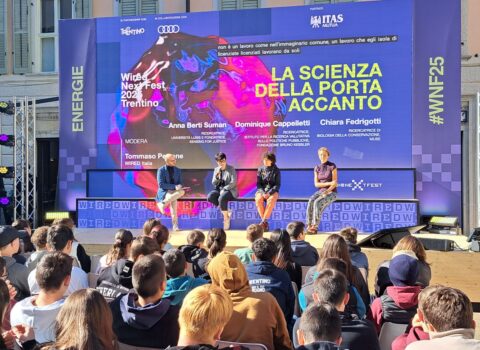
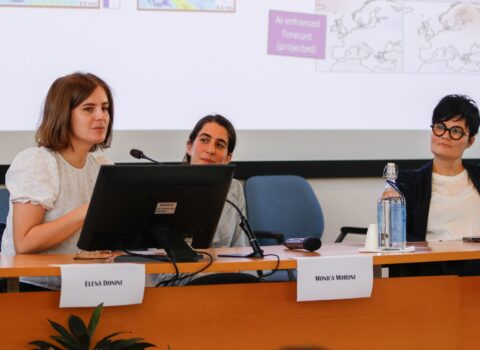
The day began with a plenary session in Stringa Hall, during which several FBK researchers shared their personal stories—not only what they do today, but also how they got there, what they dreamed of becoming as children, and what inspired them to pursue research. It was an authentic career orientation moment in which research revealed its most human side: journeys that are not always linear, but shaped by doubts, detours, unexpected turns, and the realization that the destination is never entirely predetermined.
The SPARKLE project, selected and supported by Fondo per la Repubblica Digitale Impresa sociale (the Digital Republic Fund Social Enterprise), was founded on the idea that encouraging girls and boys to engage with STEM subjects requires early action—before educational paths become fixed and stereotypes take root.The project was coordinated by FBK and involved five of its centers—IRVAPP, Sensors & Devices, the Center for Religious Studies, Augmented Intelligence, and the Scholars and PhD Program Unit—in partnership with the University of Verona, the University of Trento, and Level Up, a science communication and educational design laboratory. The goal was not only to teach methods and concepts, but also to show every student that the world of science, technology, and research is a place where they belong. Not as visitors but as active participants
The available data continues to highlight the need for action. On one hand, the growing demand for STEM skills in the labor market is not being met: the number of young people choosing these fields of study remains well below what is needed. Nationwide, 74% of positions requiring graduates in electronic and information engineering are difficult to fill; in Trentino-Alto Adige, that figure rises to 86% (source: Unioncamere). On the other hand, although women account for the majority of university enrollments, only 19% of female students choose STEM degree programs, compared with 39% of male students (source: MUR). One of the most persistent barriers remains the influence of stereotypes, which undermine self-confidence and discourage choices that would otherwise be within reach.
SPARKLE sought to address both challenges: bringing science directly into the hands of girls and boys while also creating opportunities to reflect on gender inequalities and the mechanisms that sustain them. This included a coaching program dedicated to challenging stereotypes and strengthening confidence in one’s abilities.
One final and essential piece remains, and work on it is already underway: the rigorous evaluation of the project. Designing well-crafted initiatives is not enough—we also need to know whether they work. Understanding what works, for whom, and why is the only way to build educational policies based on evidence rather than good intentions alone.
Science Day also highlighted an aspect of FBK that may not always be visible from the outside: its collaborative spirit. In addition to the centers directly involved in the project, dozens of researchers enthusiastically volunteered their time for activities, demonstrations, and interactive booths. It was a collective effort driven by a shared belief: that bringing science beyond the laboratory walls—and bringing young people into those spaces—is worth the effort.
________________________________________
Special thanks go to all the school partners that participated in the SPARKLE project with great enthusiasm and collaboration: the “Celestino Endrici” Middle and High School, the Altopiano di Piné School District, the A. Palladio di Pojana Maggiore School District, the “B. Clesio” School District, the Pergine 1 School District, the Pergine 2 “C. Freinet,” School District, the Trento 2 “Comenius” School District, the Trento 3 School District, the Valle dei Laghi-Dro School District, the Valle di Ledro, and Val Liona School Districts.
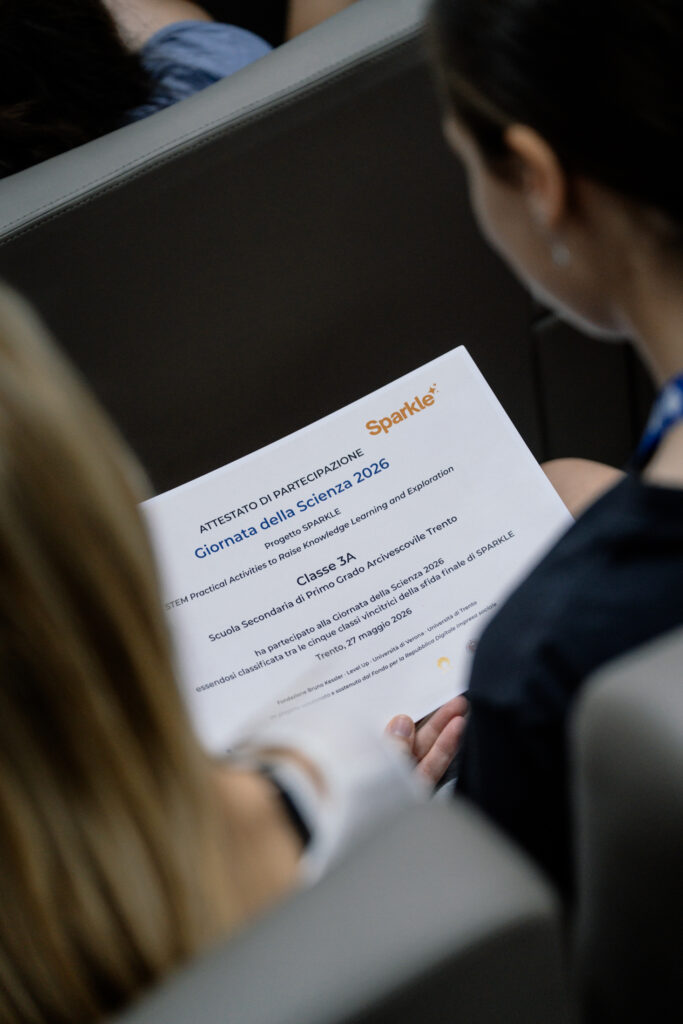
The classes participating in Science Day were 2D SSPG Argentario of Cognola, 3E SSPG of Cles, 2A SSPG of Dro, 2A SSPG of Orgiano, and 3A of the Arcivescovile Middle and High School of Trento.
The author/s
RELATED VIDEO
-
Quando la scienza incontra le nuove generazioni: la Giornata della Scienza di SPARKLE in FBK
Related articles