
Innovation ecosystems: FBK hosts exchange between research and businesses with the TEHA Club
March 23, 2026
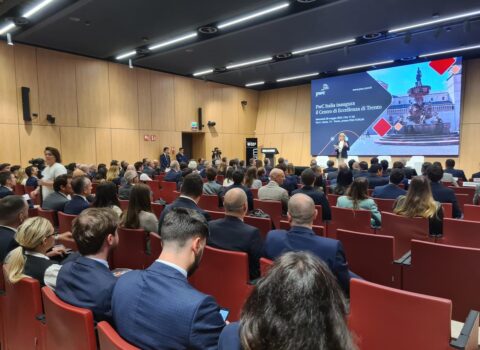
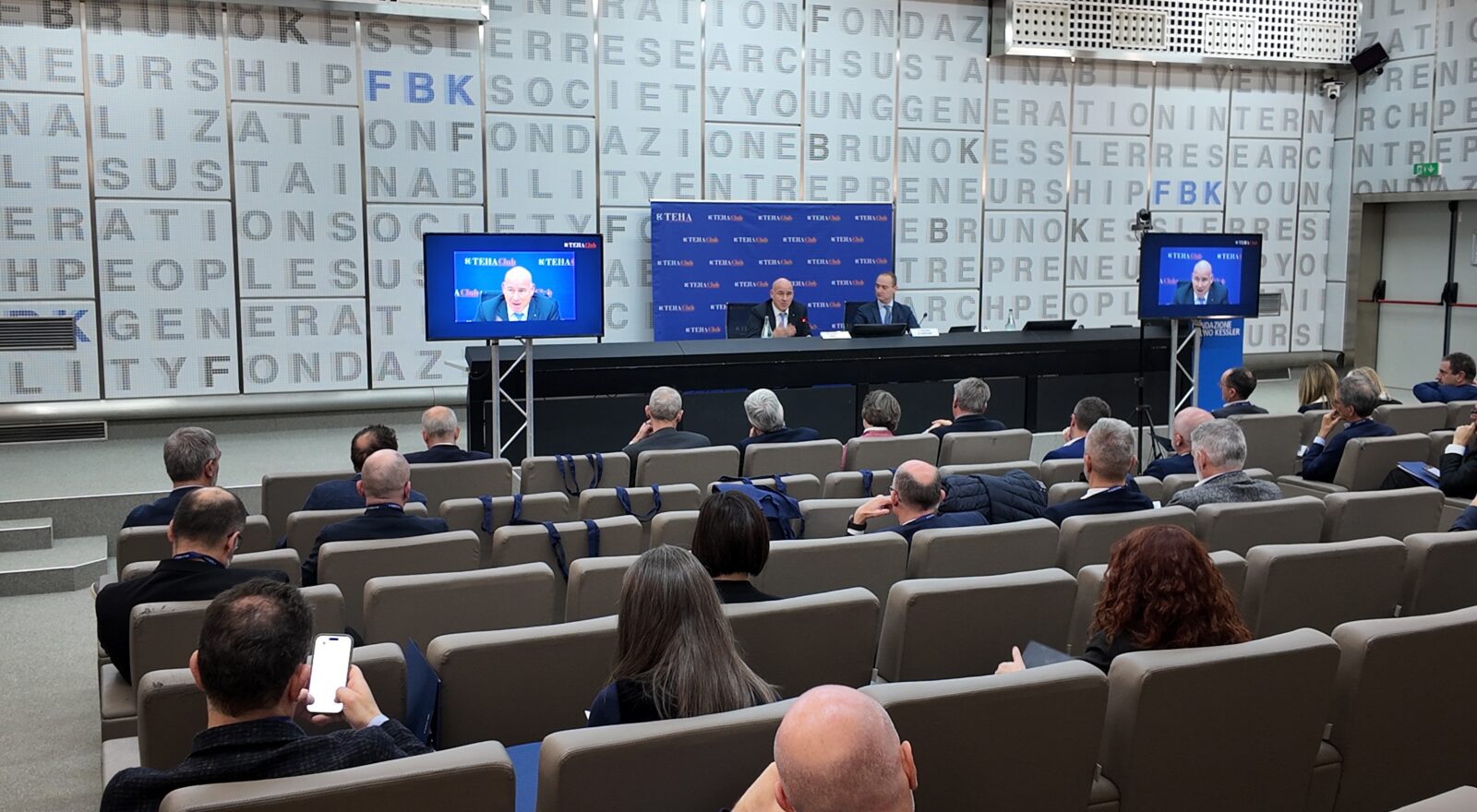
On March 20, a session titled “Ecosystems of Innovation: From Research to Business in Technological Discontinuity” was held at the FBK hub in Povo. The event was promoted by the TEHA Club and dedicated to the CEO Community, an international strategic consulting think tank within The European House – Ambrosetti, a leading Italian group in management consulting and applied research.
Moderated by Corrado Panzeri (Partner and Head of InnoTech Hub, TEHA), Head of Innovation and Technology, the session involved more than 30 company representatives, along with researchers and key stakeholders from the innovation ecosystem. The discussion focused on the strategic role of collaboration between companies and research centers in responsibly managing ongoing technological transformations. In his opening remarks, Panzeri presented data from the TEHA-Global Innosystem Index 2025 and the TEHA-Regional Innosystem Index 2025.
At the national level, Italy ranks in the middle of the index (30th out of 50 countries analyzed), behind France, Germany, and Spain. The data show a strong ability to generate innovative outputs, but lower effectiveness in inputs, particularly in terms of investment and enabling factors. At the regional level, out of 242 European regions analyzed, only two Italian regions—Lombardy and Lazio—rank among the top 50, with Paris in first place. Trentino falls in the middle tier of the ranking, showing a growth trend despite being limited by its smaller size.
Trentino-Alto Adige, however, shows particularly positive indicators in R&D. Strong investment in human capital stands out, exceeding the average of other Italian regions, with a high share of workers employed in research and development and a significant proportion of employees in high-tech sectors—among the highest in the country.
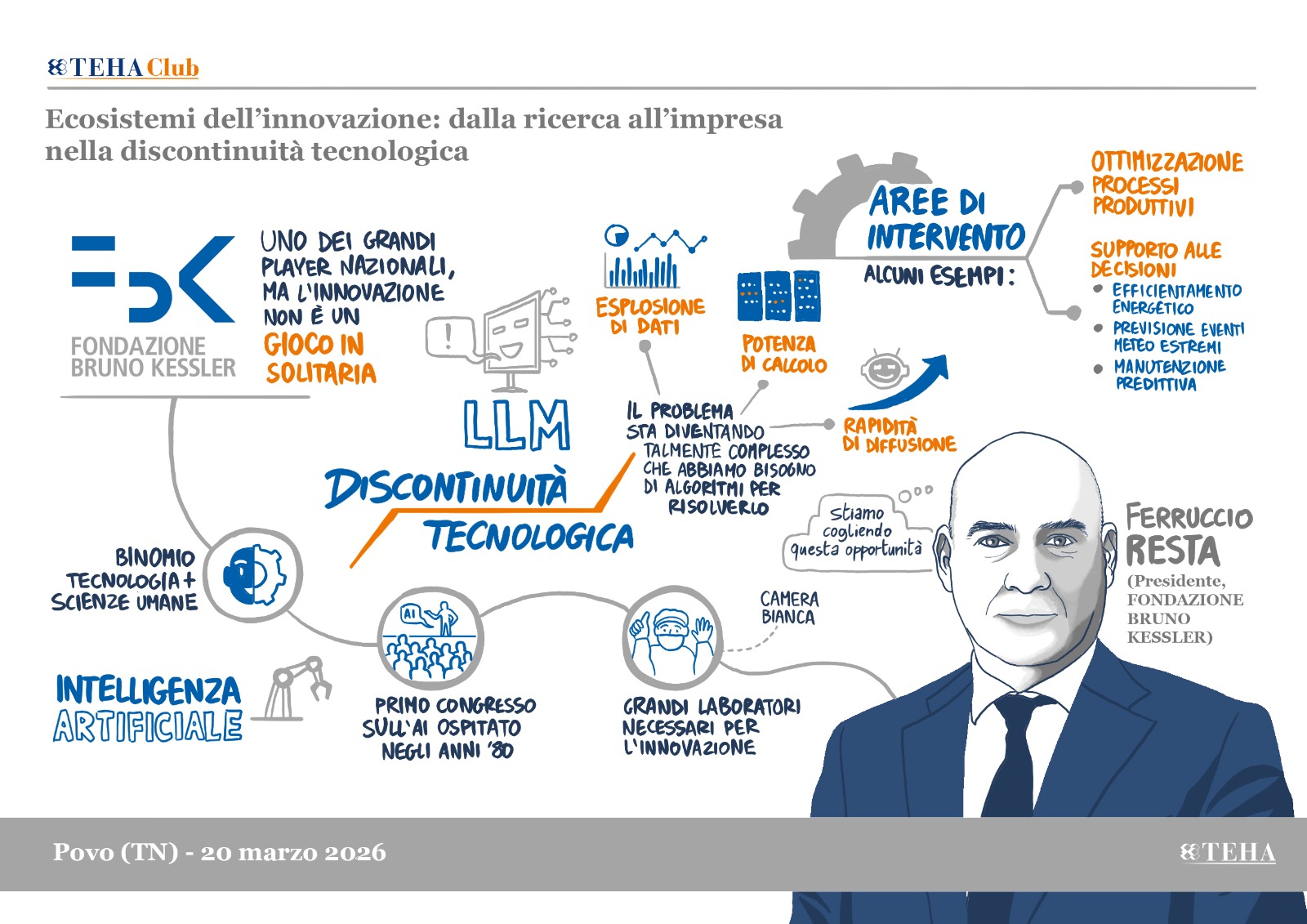
Ferruccio Resta, President of Fondazione Bruno Kessler (FBK), opened the session by emphasizing that the current phase is marked by profound technological discontinuity, driven by the explosion of data, increased computing power, and the rapid spread of artificial intelligence. In this context, AI acts as a cross-cutting enabling factor, with applications ranging from digital to physical processes, from content creation to robotics and predictive maintenance.
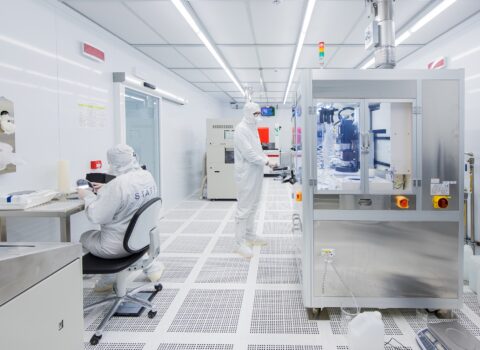
Resta highlighted FBK’s role as a national and international hub, supported by three distinctive elements: the integration of technology and the humanities, a forward-looking vision on AI, and access to advanced scientific infrastructure, including one of Europe’s leading clean rooms.
In a context where innovation requires both speed and openness, FBK is strengthening its position by developing new skills, leveraging data, and adopting an increasingly collaborative approach with companies and startups, with the goal of translating research into tangible impact.
Resta also raised key questions for companies and institutions: how can innovation opportunities be seized while minimizing risks? How can sustainable and competitive development models be built? And above all, are we truly ready—in terms of skills and organizational capabilities—to face this transformation?
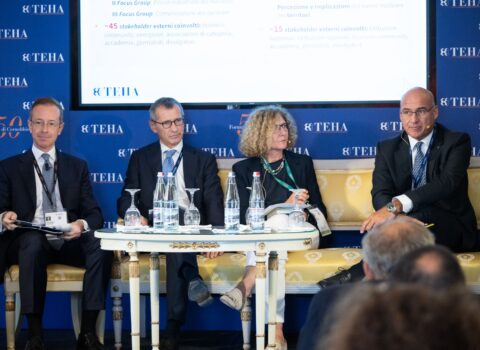
Throughout the event, there was significant input from representatives of industry and the innovation ecosystem, including Antonio Marcegaglia, President of Marcegaglia Steel and member of the FBK Advisory Board; Alessandro De Biasio, CEO of Cefriel; Stefano Granella, CEO of Dolomiti Energia; Matteo Mazzotta, CEO of Green Energy Storage; Emanuela Grandi, Managing Director of Equinix; and Andrea Bombardi, Vice President of Open Innovation Hubs at the Materials Development Center. The case studies presented highlighted the tangible benefits of integrating advanced research with industrial applications, confirming the strategic value of collaboration between companies and research centers.
Among the key themes discussed was the importance of so-called “hinge” skills—professionals capable of bridging languages, needs, and timelines between research and industry—now essential for effective innovation ecosystems. This issue is part of a broader context in which challenges such as talent shortages, rapid technological change, and the scalability of AI-based solutions remain significant.
The event continued with a visit to the FBK Clean Room, giving participants a firsthand look at advanced research infrastructure, followed by a networking lunch featuring several technological demonstrations.
Demos presented by the Center for Digital Industry and the Center for Cybersecurity included:
- the robotic arm that listens, thinks, and grasps;
- a navigation-style web app designed to improve road safety within the CORSIA project;
- two AI-based solutions aimed at expanding access to and use of training and communication content in corporate settings;
- an AI solution for 3D documentation and analysis of cultural heritage;
- a realistic road environment simulator in which an autonomous agent with an AI-based PNT system adapts to changing conditions, developed within the VAIPOSA project;
- a framework that helps system administrators correct unsafe configurations and comply with (inter)national cybersecurity guidelines;
- a simulator to assess risks and activate countermeasures against AI-based impersonation attacks;
The demonstrations showcased technologies and solutions developed in areas such as digital identity, secure communications (TLS), deepfakes, and computer vision, highlighting the breadth and maturity of the solutions presented.