Bruno Lepri
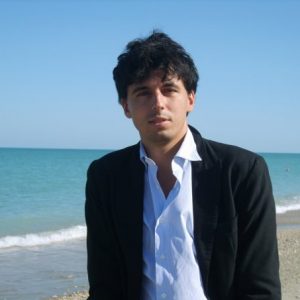
Bruno Lepri is a senior researcher at Fondazione Bruno Kessler, where he leads the Mobile and Social Computing (MobS) Lab within the Augmented Intelligence Center. He is also Chief Scientific Officer of Ipazia Spa, a startup focused on generative AI. He currently serves as co-director of the ELLIS Unit Trento—a joint research unit between FBK and the University of Trento dedicated to machine learning—and of the Center for Computational Social Sciences, also in collaboration with the University of Trento.
Since May 2024, he has been a member of the Scientific Committee of the National Tourism Observatory.
Previously, he was Chief AI Scientist at ManpowerGroup and a senior researcher affiliated with Data-Pop Alliance, a think tank on big data and sustainable development founded by the MIT Media Lab and the Harvard Humanitarian Initiative. In 2010, he received a Marie Curie Fellowship, which enabled him to work as a postdoctoral researcher at the MIT Media Lab for three years.
He holds a PhD in Computer Science from the University of Trento.
He also founded Profilio, a startup specializing in computational personality analysis with applications in marketing, human resources, and related fields.
His research interests include computational social sciences, cooperative AI and generative social agents, machine learning, urban computing, and new models for personal data sharing.
Spotlight's articles
-
 February 19, 2026I Want to Break Free!When AIs develop antisocial behavior. Interview with Gian Maria Campedelli, co-author of a new study exploring the implications and emerging risks of deploying persuasive, hierarchically organized autonomous agents
 -
 October 30, 2025What a Brain-Simulating Model Revealed About the Hidden Rules of Human CooperationKey findings from “AI@TN: study of Cooperative AI frameworks” - funded by the Autonomous Province of Trento and authored by Bruno Lepri and Laura Ferrarotti (from MobS @ FBK), and Riccardo Gallotti and Lucila Alvarez-Zuzek (from CHuB Lab @ FBK).
 -
 July 10, 2024Physics for planning citiesA research team from FBK and the universities of Trento and Padua developed a computational model that reproduces the structures of urban transport systems.
 -
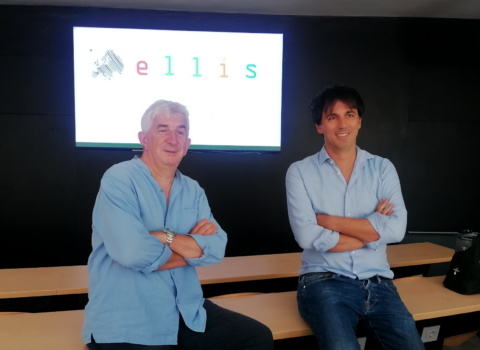 September 8, 2023Artificial intelligence, Trentino unit of Ellis startedFondazione Bruno Kessler and University of Trento join the European Machine Learning Network. The Department of Engineering and Information Science and the Center for Digital Society are involved. The initiative will serve the purpose of creating new businesses and start-ups
 -
 March 31, 2023Artificial Intelligence: Tango guides the revolutionThe new EU-funded project that will kick off in autumn 2023, with 21 partner organisations from 9 countries across Europe, is set to develop a new generation of human-centric AI systems and to strengthen the leadership of Europe in this area
 -
 June 10, 2021Big data and non-religionA new paper authored by FBK researchers Dominik Balazka and Bruno Lepri, with the contribution of Prof. Dick Houtman (KU Leuven), sheds light on the possible impact of Big Data on the future development of non-religion studies
 -
 February 5, 2021From code to market: Network of developers and correlated returns of cryptocurrenciesCode has become an important societal regulator that challenges traditional institutions, from national laws to financial markets. A new research paper, coauthored by FBK researchers Lorenzo Lucchini and Bruno Lepri, has been published on Science Advances
 -
 November 27, 2020Work from home: results beyond expectations with some open questions about the futureThe data illustrated by Bruno Lepri during the webinar organized by FBK Academy are the findings of studies conducted by Harvard Business School, Austin Business School and Humanyze
 -
 September 21, 2020Big data, big faith? About beliefs and biases in algorithmic decision-makingWith the arrival of Big Data analytics, data rapidly became the petroleum of the 21st century and a new social contract came into existence.
 -
 September 3, 2020Crime in large cities: different cities, different causesThe new study led by researchers Marco De Nadai and Bruno Lepri with FBK's Mobile and Social Computing Lab that explores the correlation between crime, socioeconomic conditions, environment features and mobility in 4 megacities has been published in "Nature Scientific Reports". Findings show how the variability of the dynamics and the history of each city make it very difficult to suggest universal recommendations to reduce crime